

Greetings, Fleet Safety Champs,
Safety is no game, but learning defensive driving tips can be fun and effective! This week, dive into our SAFER Fleet Trivia, where the road is your gameboard, your decisions matter, and the winning play is always SAFER.
Test your knowledge with defensive driving tips across categories like fleet fundamentals, cannabis awareness, and more to sharpen your instincts and keep safety first.
Grab your imaginary game token, roll the dice, and let’s make learning defensive driving tips engaging.
Let the SAFER games begin!
🔵 Geography: Defensive Driving Tips for Fleet Fundamentals
Question:
In North America, which of the following is considered a high-profile vehicle that may require different routing due to weather patterns, bridge clearance, and regional wind tunnels?
A. A compact delivery sedan
B. A cargo van with rooftop HVAC unit
C. A low-profile passenger bus
D. A mid-size pickup truck
Answer:
B, C, and D. High-profile vehicles are defined not just by height, but by surface area and wind resistance. Cargo vans with rooftop units, low-profile buses (which still have substantial height and length), and mid-size pickups with added cargo or toppers all meet the criteria under specific conditions. Geography matters too as these vehicles are especially vulnerable in flat plains, coastal corridors, and mountain passes, where crosswinds and elevation shifts increase risk.
🟣 Arts & Literature: Defensive Driving Tips for Cannabis Awareness
Question:
From beat poets to modern songwriters, cannabis has often been romanticized as a muse for creativity. But which of the following behaviors may signal a cannabis-impaired driver, regardless of how “inspired” they feel?
A. Over-correcting the steering wheel
B. Maintaining perfect speed and control
C. Being overly cautious and slow
D. Both A and C
Answer:
D. While some claim cannabis boosts creativity, it does not make anyone a SAFER driver. Impairment often shows up as overcorrection or exaggerated caution, signs that something is off-script. At NTSI, we train drivers to understand not just what they do, but why they do it, because every crash tells a story, and the best ones are the ones we never have to write.
🟡 History: Defensive Driving Tips for Driver Behavior
Question:
Historically, what has been the strongest predictor of future fleet crashes, according to decades of crash data and safety studies?
A. Vehicle age
B. Route distance
C. Past driver behavior
D. Weather
Answer:
C. Decades of research consistently show that prior driving behaviors such as past crashes, reckless driving violations, improper signaling, failure to yield, and erratic lane changes significantly raise the likelihood of future crashes, some by over 100 percent. This historical data underscores why behavioral modification training, not just rules, matters.
🟢 Science & Nature: Defensive Driving Tips for Utility Vehicles
Question:
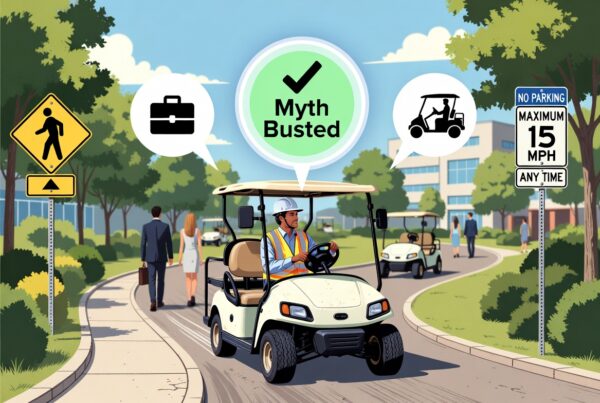
From retirement communities and government campuses to sprawling tech parks and universities, utility vehicles and golf carts navigate people-packed environments full of sensory input. And we humans? We are convinced we can do everything, everywhere, all at once. But can we? What do you think is the leading cause of crashes in these low-speed zones?
A. Mechanical failure
B. Driver distraction
C. Pedestrian fault
D. Slippery surfaces
Answer:
B. Even at low speeds, divided attention has real consequences. Believing we can multitask may feel natural, but science disagrees, our brains are wired to focus on one thing at a time. Fleet defensive driving training reinforces that focus, helping drivers tune out the noise and tune into safety.
🟠 Sports & Leisure: Defensive Driving Tips with GOAL Method
Question:
True or False: A quick mirror check is just as effective as physically inspecting your surroundings before backing up a fleet vehicle.
Answer:
False. Relying solely on mirrors is like taking a shot without checking your footing, high risk, low control. The GOAL method (Get Out And Look) is the fleet driver’s pre-play warmup: it helps prevent blind spot mishaps and pedestrian collisions. Just like in sports, positioning and awareness matter before every move. And skipping the prep? That is how incidents happen. Enforcing GOAL is not just a recommendation, it is a smart safety strategy and part of the behavior-based SAFER driver training culture that NTSI delivers.
🔴 Entertainment: Defensive Driving Tips for Cost & ROI
Question:
In the fleet world, what is the equivalent of a box office hit, something that consistently wins over insurers and improves your financial scorecard?
A. Buy newer vehicles
B. Install dashcams
C. Provide proof of efficacy-based driver safety training
D. File fewer claims
Answer:
C. Dashcams might get applause, but the real blockbuster is evidence. Fleets that can provide proof of efficacy-based driver safety training earn top billing with insurers and vastly improved ROI. Why? Because insurers know that behavior change drives down risk. SAFER, well-trained drivers are the standout performers whose actions prevent crashes, reduce costs, and keep the credits rolling without incident.
🎯 And the Winner Is… SAFER!
Whether you conquered every category or picked up a few new facts along the way, you just moved one wedge closer to completing the ultimate game: a SAFER fleet.
At NTSI, SAFER stands for Safer, Aware, Focused, Educated, and Responsible, the cornerstones of fleet success and the heart of our winning formula for every driving game.
That formula?
K + A + V = B
Knowledge + Attitude + Values = Behavior
Fleet safety and defensive driver training does not have to feel like a chore. A grounded, engaging, and dynamic approach improves retention, strengthens decision-making, and reinforces your team’s most vital mission: getting the job done and getting everyone home safe. Play to win, because defensive driving tips are no trivial pursuit.
Until next Tuesday,
Stay curious. Stay competitive. Stay SAFER.