

Greetings, Fleet Cart and Cargo Crew,
Some things you expect to see crossing Charleston’s beautiful Arthur Ravenel Jr. Bridge: cars, cargo vans, trucks, and maybe an occasional group of motorcyclists. What you do not expect? A golf cart. Yet there it was, zipping along at a fraction of the surrounding traffic’s speed, a tiny speck of “what in the world” in a sea of steel and asphalt. “Life in the Fast Lane” it was not, proving that what makes for a great song is a terrible operating plan for a golf cart or utility vehicle.
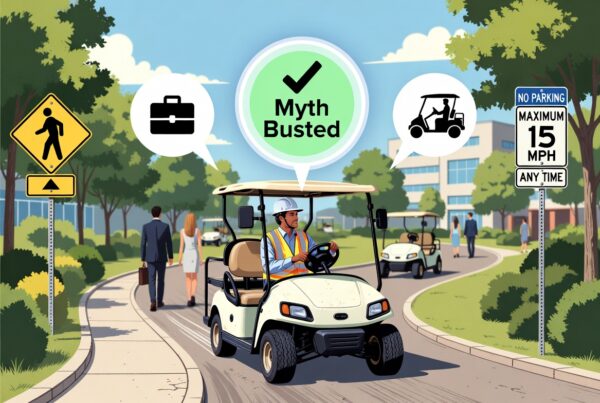
These smaller fleet workhorses are everywhere in August: from fairs and festivals to sporting events, campuses, and corporate grounds. Increasingly, golf carts and utility vehicles are also turning up in gated communities, retirement villages, and neighborhood streets. Fleet teams depend on them to move people, equipment, and supplies, but their efficiency, quiet operation, easy maneuverability, and ubiquity in non-fleet environments can lull drivers into underestimating the hazards. One place they should never appear? The Ravenel Bridge, or any bridge or highway for that matter.
In fact, golf cart accidents account for an estimated 26,000 to nearly 150,000 emergency department visits annually, with children under 16 and older adults among the most vulnerable. Injuries often include contusions, fractures, lacerations, and sprains or strains. Golf cart defensive driving is just as essential for fleet operators as the safety practices applied to our largest trucks.
NTSI’s Top Golf Cart Defensive Driving and Utility Vehicle OperationTips
🚗 Stay in Your Lane
Operate only on approved routes or designated service paths. Mixing with high-speed traffic is unsafe for everyone involved. Do not be that guy on the Ravenel Bridge!
📦 Balance the Load
Follow weight limits for both cargo and passengers. Overloading affects handling, braking, and stability. Your golf cart is not auditioning for “Haulin’ Fleet.” Keep it light and safe.
⚠️ Corner with Care
A higher center of gravity means sharp turns at speed can cause rollovers. Slow and steady wins here. This is a fleet vehicle, not a Formula One car—save the apex racing for the pros.
🏁 Treat it Like a Fleet Vehicle
Golf carts and utility vehicles may be smaller, but they still require the same level of respect, focus, and professionalism as any other vehicle in your fleet. If it moves under your fleet’s name, it moves with your fleet’s reputation.
SAFER in Small Vehicles
NTSI’s SAFER model applies just as well to golf carts as it does to tractor-trailers:
- S – Safer: Follow the rules of the specific environment. On a bridge? That is an automatic no-go.
- A – Aware: Watch for blind spots caused by cargo, canopies, or other vehicles.
- F – Focused: Eliminate distractions. Even at 15 mph, a split-second lapse can lead to a rollover or collision.
- E – Educated: Know your vehicle’s limits and your own.
- R – Responsible: Remember that you are representing your organization every time you drive.
Small does not mean harmless. Every cart and utility vehicle in your fleet is an investment, a responsibility, and a potential liability if not operated correctly. The goal is to keep them moving people and supplies smoothly and safely, not starring in the next viral video for all the wrong reasons.
If your team could benefit from targeted utility vehicle and golf cart defensive driving training, NTSI has the programs to make that happen.
After all, “Life in the Fast Lane” belongs on your playlist, not in your operating procedures.
Until next Tuesday, stay SAFER out there. And golf carts?! Stay off the Ravenel Bridge!