
Greetings, Fleet Myth Masters,
Back in Spring, we teed up and took aim at a round of golf cart and utility vehicle fleet safety myths, and you all proved you could handle the truth!
Now we’re back for the Summer Sequel, doubling down on smart Golf Cart Fleet Training to help operators stay sharp and safe. As we highlighted just last week, these nimble and compact workhorses are everywhere, from campuses and corporate grounds to neighborhoods, retirement villages, and yes, the occasional ill-advised highway cameo.
So grab your SAFER mindset and let’s get busting. 🧠 💥 🛞
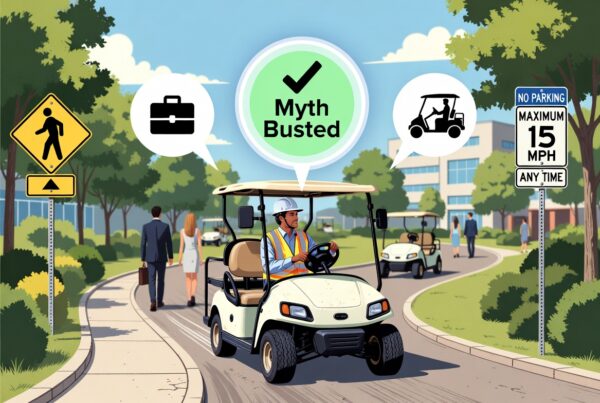
🕵️♂️ Myth #1: “Golf carts aren’t real fleet vehicles.”
❌ BUSTED: If it moves people, equipment, or supplies under your organization’s name, it is part of your fleet. Period. Golf cart fleet training ensures that golf carts and utility vehicles meet the same operational standards, training requirements, and maintenance protocols as larger vehicles. Skipping those steps because they are “just carts” invites incidents and liability. Fleet management best practices apply, no matter the vehicle’s size or top speed.
🎯 Myth #2: “Fleet-level policies improve golf cart and utility vehicle safety.”
✅ TRUE: When smaller vehicles are treated with the same procedural respect as delivery vans or cargo trucks, safety improves across the board. Written policies, scheduled maintenance, and designated travel routes give operators clear guidelines and reduce “casual” misuse. Case studies confirm that formal rules cut incident rates by eliminating ambiguity. Clear expectations keep these nimble machines working for you, not against you.
🛞 Myth #3: “They’re slow, so they’re safe.”
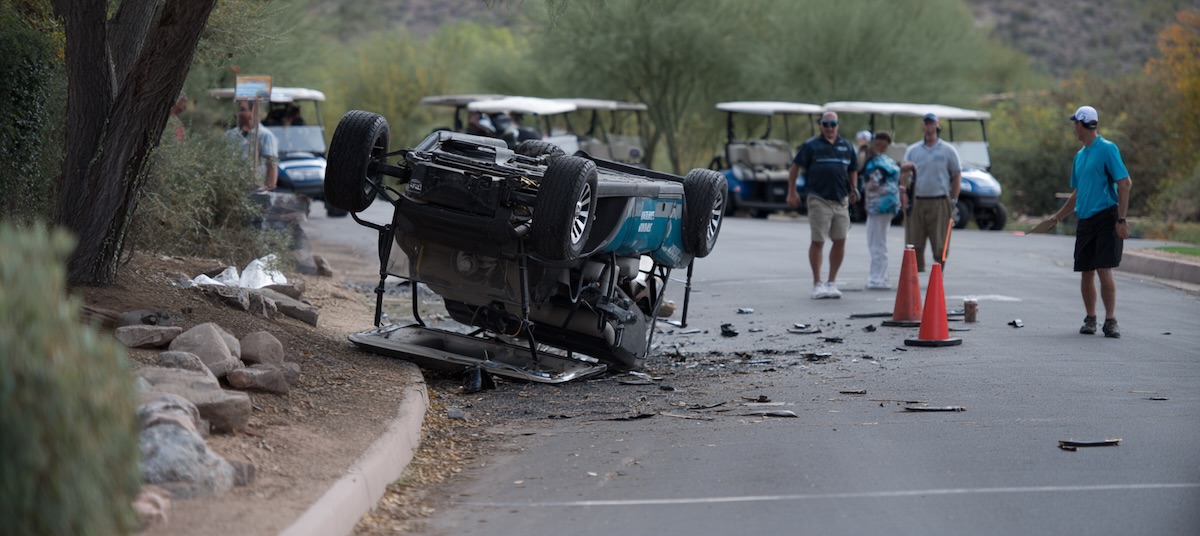
❌ BUSTED: Top speed is not the only factor in accident risk. The National Electronic Injury Surveillance System estimates tens of thousands of golf cart–related injuries annually, many involving rollovers, ejections, or collisions. Small vehicles often have a higher center of gravity, which makes them prone to tipping during sharp turns or sudden maneuvers. Add in passengers or cargo, and physics will catch up quickly.
Myth #4: “Rollover risk is driven by turning and load, not top speed.”
✅ TRUE: Even at 10 to 15 mph, a sharp steering input on a high center-of-gravity cart can lift a wheel and tip the vehicle, especially with rear passengers, roof canopies, uneven surfaces, or poorly balanced cargo. Fleet controls that prevent most rollovers are simple: slow before the turn, steer smoothly, keep cargo low and centered, honor passenger and weight limits, keep all limbs inside, and avoid side-hills or abrupt direction changes. Defensive driving habits at low speeds prevent high-consequence incidents.
🚧 Myth 5: “Golf carts don’t need pre-trip inspections.”
❌ BUSTED: This myth is especially dangerous and one that solid Golf Cart Fleet Training programs help eliminate. Checking tires, brakes, steering, lights, and horn function before use can prevent the most common causes of golf cart incidents. Battery issues alone can cause sudden stops or loss of power steering, creating hazards in crowded areas. Skipping a two-minute accident prevention pre-check is like skipping a seatbelt, it only feels fine until it is not. The GOAL is to be SAFER so Get Out And Look!
📜 Myth #6: “Licensing and training aren’t necessary.”
❌ BUSTED: State and local laws vary, and many require permits, training, or age minimums for operating golf carts on certain roads. Even when not mandated, internal fleet training should be non-negotiable. At NTSI, we do not teach people how to drive, we use behavior modification to teach them how to drive SAFER. Our golf cart and utility vehicle defensive driving program equips operators to navigate with precision, manage unexpected hazards, and understand the unique physics of these smaller vehicles. Most importantly, we help drivers change the behaviors that put people, equipment, and reputations at risk. A little targeted training now can prevent a costly, avoidable incident later.
🔇 Myth #7: “Quiet carts mean SAFER carts.”
✅ TRUE: Low noise does not equal low risk. In fact, the near-silent operation of golf carts and utility vehicles can catch pedestrians and cyclists off guard, leading to near misses or collisions. In busy campuses, corporate grounds, or retirement communities, people may step directly into your path simply because they did not hear you coming. Smart fleets combat this with clear travel routes, slow approach speeds, and add-ons like warning bells, buzzers, or flashing lights. Safety is not about being sneaky, it is about being seen and heard.
The SAFER Approach
NTSI’s SAFER model applies to every fleet vehicle, from tractor-trailers to golf carts:
- S – Safer: Follow the rules of the environment, no shortcuts, no exceptions.
- A – Aware: Watch for blind spots caused by canopies, cargo, or other vehicles.
- F – Focused: Distractions are dangerous, even at 15 mph.
- E – Educated: Know your vehicle’s limits and your own.
- R – Responsible: You carry your organization’s reputation every time you drive.
Golf carts and utility vehicles may be compact, but they carry significant weight when it comes to safety. Busting these myths is more than an academic exercise; it is a practical way to keep your fleet operating smoothly, free from costly interruptions and preventable injuries, while keeping drivers engaged and invested in doing things the SAFER way.
If your fleet could benefit from targeted golf cart and utility vehicle defensive driving training, or any form of defensive driving instruction, NTSI offers efficacy-backed, customized fleet programs to make it happen.
Until next Tuesday, stay SAFER out there!